My Beginnings with Glass
I was born on October 18, 1958, on the island of Murano in Venice.
Soon after I was born, my family moved to the historic center of Venice. When I started elementary school, I began spending my summer vacations traveling to Murano on my uncle’s boat, which carried tourists. I would spend my days from morning until evening at a glass factory, watching the master glassmakers at work with endless curiosity.
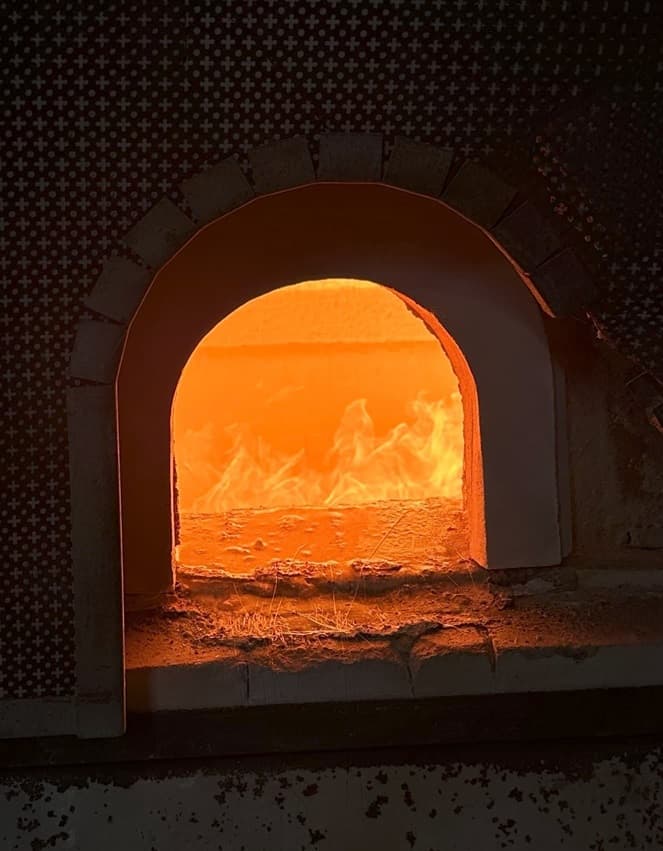
Surrounded by intense heat from furnaces reaching temperatures of 800°C, the dazzling, red-hot glass changed shape before my eyes through the skilled and lively movements of the glassmakers. It was a world where magical beauty and danger existed side by side. I was frightened by it, yet I could never take my eyes away.
At the glass factory, I worked as a “garzonetto,” a little boy who helped with simple tasks such as carrying the glassmaking tools. Some of the glassmakers were kind to me, while others were strict. When I got too close to the furnace or touched the tips of the tools used to shape the glass, they would shout at me to warn me. The furnace was so dangerous, and if even a trace of oil from my hands got on the part of a tool that grips the glass, the tool could slip and fail to hold the glass properly.
Protected by their strictness as well as their gentleness, I gradually became familiar with glass.
During their breaks, the glassmakers would refresh themselves with a drink made by mixing wine with a sweet carbonated beverage like Sprite. They would drink one or two liters of it right in the middle of the day while continuing to work. This was simply part of their everyday life.
After graduating from middle school, I began working part-time at the glass factory, explaining the glassmaking process to tourists. At the factory, they made glass figures of animals such as horses, cats, and birds using a technique known as “alla prima”. Alla prima is a technique in which a figure is shaped from a single piece of glass in one continuous working process. The glassmaker would form the body as soon as the glass was taken from the furnace, then stretch and bend the glass to create the neck, legs, and tail, shaping the figure as if drawing it in a single continuous stroke. However, the bird figures had no eyes or beaks. These were made separately in another room using a burner.
One day, one of the glassmakers asked me, “Would you like to work with us after you finish guiding the tourists?” My job was to make the eyes and beaks for the birds, such as swans and herons, and attach them to the figures. It was my first experience actually making glass. I was paid 10 lire per piece (about 3 yen in Japanese currency at the time). The work itself was simple, and I could make more than 200 pieces in around two hours a day. For a high school student in the 1970s, it was a substantial income.
And so, I stepped into the world of glass, and little by little, my passion for it began to grow.
Yet at that time, I still had no intention of becoming a glassmaker. It was another fifteen years or so before I embarked on the path to becoming one.
[References]
M. Lotter, The Magic of Beads: A Glass Bridge Between Murano and Kyoto, Ishinsha, Kyoto, 2025, 21–22 (Japanese-English bilingual edition).